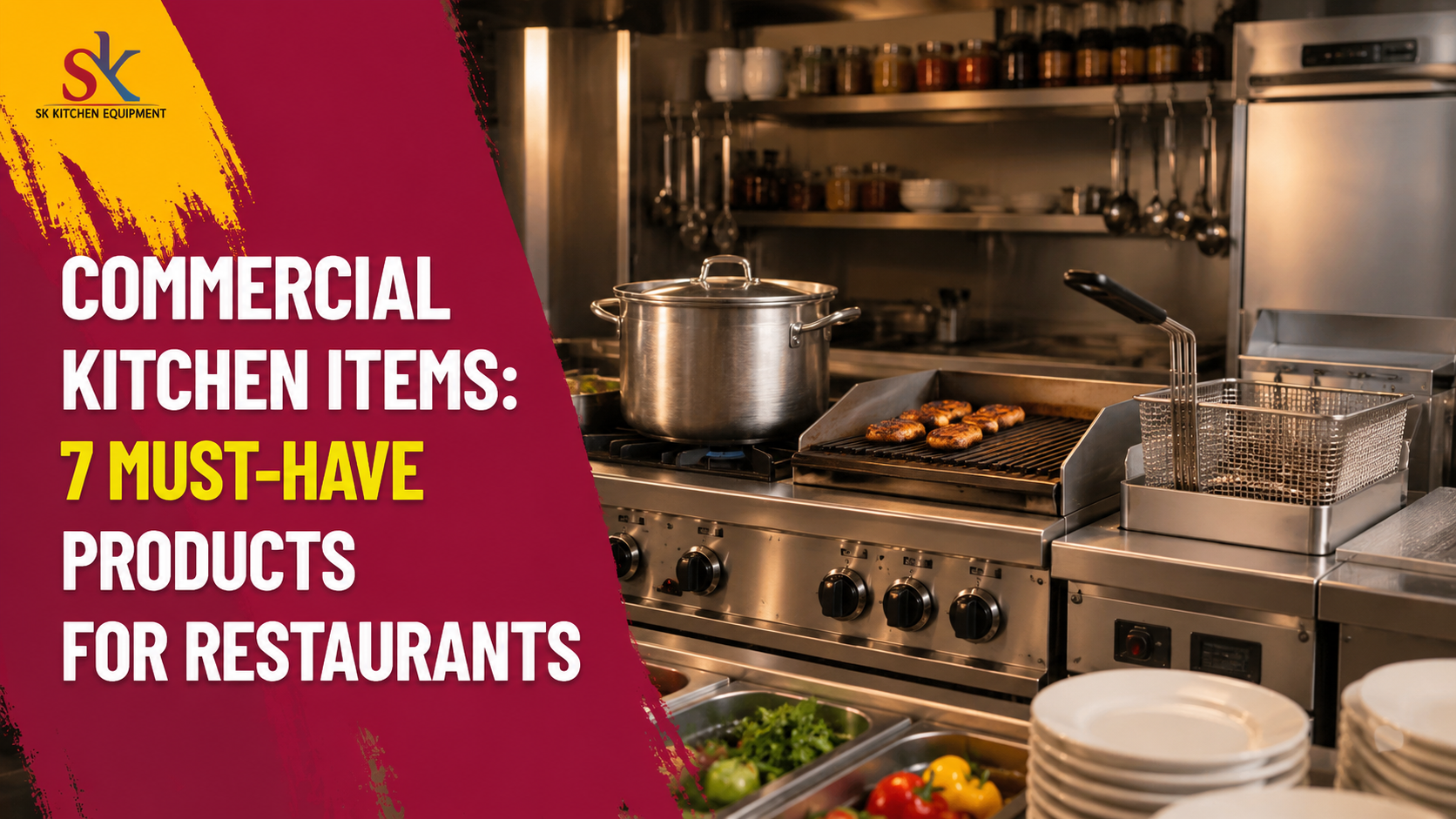
A commercial kitchen can look impressive, but looks alone do not keep orders moving. The right Commercial Kitchen items help chefs prepare, cook, store, clean, and serve food without unnecessary delays. From a strong work table to the right cooking range, every piece has a job. FSSAI states that every Food Business Operator in India must be licensed or registered, depending on the business and turnover, making proper kitchen planning important. A smart setup starts with your menu, space, workload, and workflow, not with a random shopping list from the start.
Planning Commercial Kitchen Items Around Workflow
Before choosing equipment, picture a normal service period. Ingredients arrive, staff prepare them, chefs cook orders, finished dishes move to service, and used utensils return for washing. Poorly planned movement can create bottlenecks. Divide the kitchen into zones for cooking, preparation, washing, storage, refrigeration, ventilation, and serving. Staff should not cross the kitchen repeatedly to collect supplies. This prevents unnecessary purchases. Small cafés need compact equipment; busy restaurants may need larger units.
1. Cooking Equipment and Essential Commercial Kitchen Items
Cooking equipment forms the core of a professional kitchen. Depending on the menu, you may need Indian ranges, Chinese ranges, dosa hot plates, idli steamers, tandoors, salamanders, barbecue makers, or bain maries. Choose right commercial kitchen items according to actual dishes. A South Indian restaurant may prioritise dosa and idli equipment, while an Indo-Chinese kitchen may need a Chinese range. Multi-cuisine kitchens may need several stations. Capacity matters too. Equipment should handle peak-hour demand without overcrowding the cooking area. Oversized units can consume space needed for preparation or storage.
2. Deep Fryers for Faster Fried Food Production
Fried food can be a major part of restaurant sales, but manual frying becomes slow during rush hours. A commercial deep fryer provides dedicated space for repeated frying and easier high-volume production. Consider oil capacity, cooking volume, temperature control, cleaning access, fuel or power requirements, and available space. Choose capacity according to workload, not size alone. Businesses that depend heavily on fried dishes should consider supplier expertise. Working with experienced Commercial Deep Fryer Manufacturers in Kolkata can make it easier to select a fryer based on menu, output, layout, and operating needs.
3. Preparation Stations That Keep Chefs Moving
Good commercial kitchen items for preparation save time and reduce unnecessary movement. Stainless steel work tables, mixers, grinders, cutters, kneaders, and preparation counters can make repetitive tasks easier. A station should have enough surface area for the work being performed. Frequently used ingredients and utensils should remain nearby, reducing movement during busy periods. SK Kitchen Equipment lists stainless steel work tables, table cabinets, shelves, and dish landing tables among its preparation-area products.
4. Refrigeration Keeps Ingredients Ready
Fresh ingredients need proper storage. Refrigerators, vertical chillers, water chillers, and freezers can help restaurants manage perishables while keeping ingredients ready. Do not judge refrigeration only by size. Consider stock levels, delivery frequency, and frequently accessed ingredients. The unit should fit the kitchen while providing enough capacity. Place daily-use ingredients within easy reach, while bulk supplies can stay in less active areas. This makes stock handling simpler.
5. Storage Solutions for a Less Cluttered Kitchen
A messy kitchen slows people down. Pot racks, overhead shelves, cabinets, trolleys, and organised storage areas can give tools and supplies a proper place. Use vertical space when floor area is limited. Keep heavy items at safe levels and frequently used tools near their workstations. Good storage also supports cleaning. Keeping ingredients and utensils off the floor makes surfaces easier to clean and maintain.
6. Washing Areas That Support Hygiene
Washing equipment is an important part of kitchen planning. A business may need single, double, three-sink, or four-sink units, sink tables, and dish landing areas. The washing zone should allow used utensils to reach it without interfering with food preparation. It also needs room for washing, rinsing, draining, and placing cleaned items. FSSAI requires food businesses to follow sanitary and hygienic requirements. A well-planned washing area can support these practices and a steady cleaning routine.
7. Ventilation Should Never Be an Afterthought
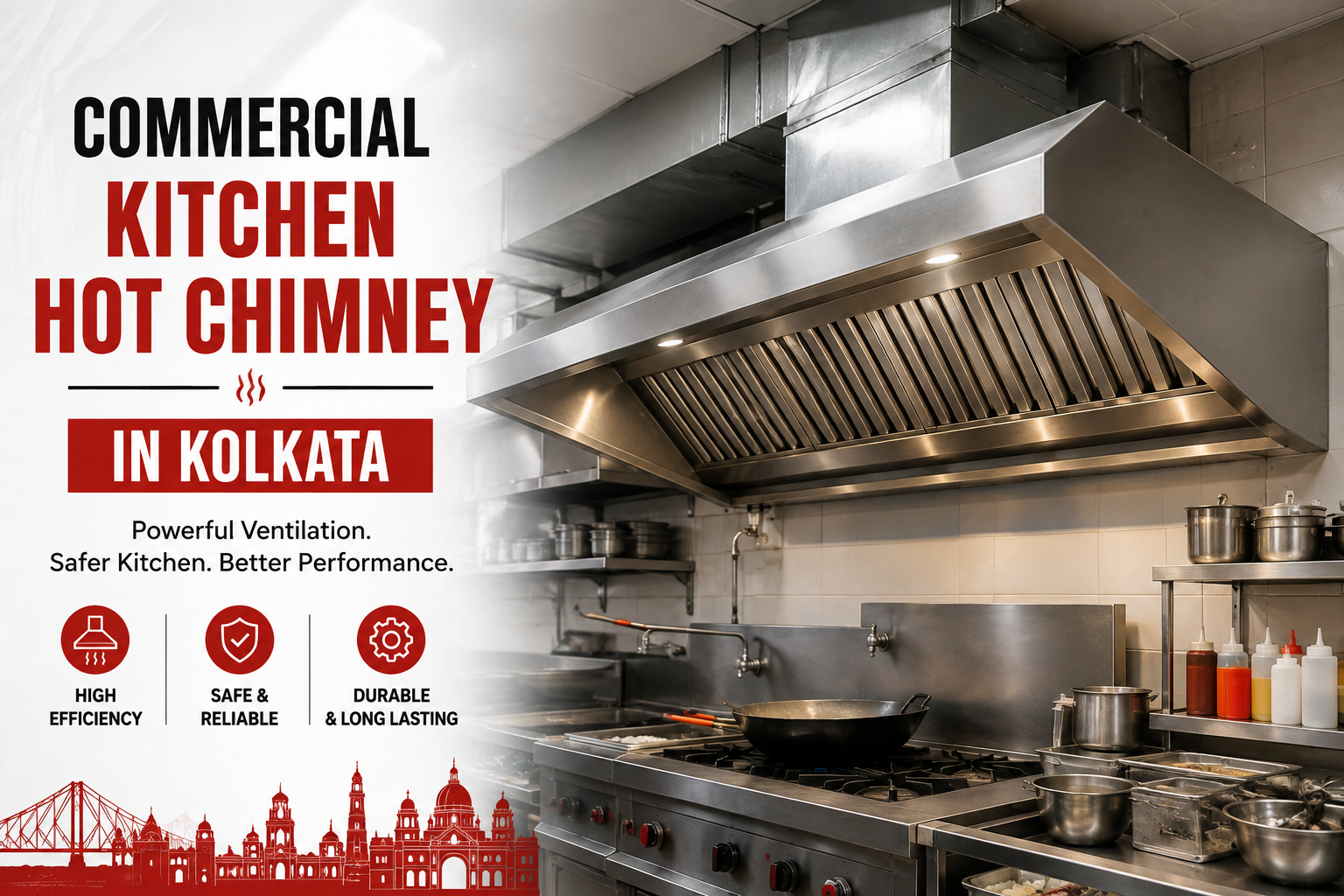
Cooking creates heat, smoke, steam, grease, and food smells. Without suitable ventilation, the kitchen can become uncomfortable and harder to maintain. An exhaust system may include stainless steel hoods, filters, blowers, fans, and ducts. The right combination depends on cooking load and layout. SK Kitchen Equipment offers stainless steel hoods with filters, blower fans, exhaust fans, GI exhaust hoods, and hot air ducts. Planning ventilation with cooking equipment creates a more practical workspace.
Why Material and Build Quality Matter for Commercial Kitchen Items
Commercial kitchens face heat, moisture, frequent cleaning, and heavy use. Products made for occasional domestic use may not suit continuous operations. Look for sturdy construction, practical dimensions, smooth surfaces, easy cleaning, and suitable capacity. Stainless steel is commonly preferred because it is durable and easier to maintain. Service matters too. Installation guidance, maintenance support, spare parts, and responsive assistance can reduce disruption when equipment is used every day.
Commercial Kitchen Items at a Glance
| Kitchen Zone | Useful Equipment | Main Role |
|---|---|---|
| Cooking | Indian range, Chinese range, dosa hot plate, tandoor | Cooking |
| Frying | Deep fryer | Frying |
| Preparation | Work table, mixer, grinder, kneader | Preparation |
| Storage | Shelves, cabinets, pot racks | Organisation |
| Refrigeration | Vertical chiller, freezer, water chiller | Storage |
| Washing | Single, double, three-sink, four-sink units | Cleaning |
| Ventilation | Hood, filter, blower, duct | Ventilation |
| Service | Bain marie, display counter | Holding |
How to Choose the Right Commercial Kitchen Items
Start with the menu and busiest service periods. List dishes, ingredients, cooking methods, and preparation steps, then identify equipment for each task.
Measure the area before ordering. Check door openings, electrical points, gas connections, drainage, ventilation routes, and staff movement. Leave enough clearance for safe operation.
Finally, compare build quality and value rather than purchase price alone. Capacity, durability, maintenance, installation, energy use, and after-sales support can affect long-term cost.
SK Kitchen Equipment provides commercial kitchen solutions for hotels, restaurants, canteens, industrial kitchens, bars, clubs, hospitals, and other hospitality environments. It also highlights custom fabrication, installation, quality assurance, and after-sales support.
Final Thoughts
A professional kitchen works best when every section supports the next. Cooking equipment should connect naturally with preparation, refrigeration, storage, washing, and ventilation. That is why selecting Commercial Kitchen items should begin with the way your business operates. Avoid products you rarely use. Focus on equipment that solves real problems, handles your workload, fits your space, and can be maintained easily. Thoughtful planning can keep your kitchen organised, productive, and ready for busy daily service.
FAQs
1. What are the most important Commercial Kitchen items for a restaurant?
Most restaurants need cooking equipment, preparation tables, refrigeration, storage, washing units, ventilation, and service equipment. Fryers, tandoors, or specialised machines depend on the menu.
2. How do I choose the right deep fryer for my business?
Consider fried-food volume, oil capacity, cooking speed, space, temperature control, cleaning, and power or fuel source. Match the fryer to daily output, not size alone.
3. Why is kitchen layout important when buying equipment?
A good layout reduces movement and helps staff move smoothly between preparation, cooking, storage, washing, and service. Measuring first prevents equipment from blocking doors, walkways, or cleaning areas.
4. Does SK Kitchen Equipment provide customised commercial kitchen solutions?
Yes. SK Kitchen Equipment states that it fabricates and installs custom solutions for restaurants, hotels, bars, clubs, hospitals, and industrial kitchens. Its range covers cooking, preparation, washing, ventilation, storage, display, and bakery needs.
5. Where can I find Commercial Deep Fryer Manufacturers in Kolkata?
Look for manufacturers that understand commercial workloads and can discuss capacity, layout, installation, maintenance, and after-sales support. SK Kitchen Equipment offers solutions across several commercial kitchen categories.